Why is my AC not blowing cold air in Greenville
Your AC is running but the air feels warm. Here are the real reasons why that happens in Greenville, TX, and how to get cold air back fast.
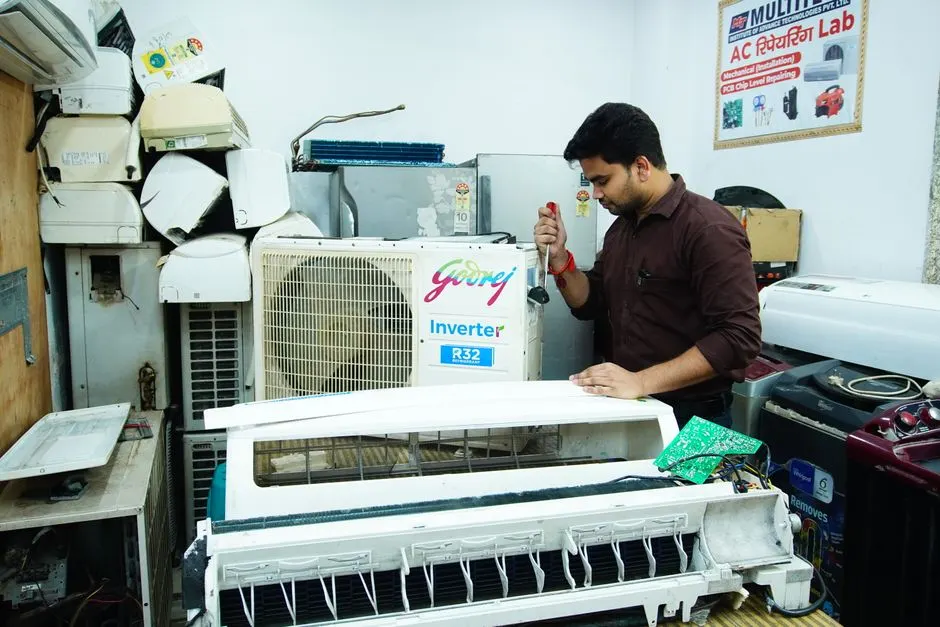
If your AC is running but the air coming out of the vents feels warm, the most likely culprits are low refrigerant, a dirty condenser coil, or a failed capacitor. In Greenville, where summer highs regularly hit 98°F and humidity sits above 60%, your system works harder than almost anywhere in Texas - and that stress exposes weak components fast. This post walks you through the real reasons your AC stops blowing cold, what you can safely check yourself, and when it's time to call a pro.
Why is my AC not blowing cold air in Greenville?
AC not blowing cold air Greenville TX is a symptom, not a diagnosis. The system is moving air - you can feel it - but that air isn't being cooled. That narrows the problem to one of three areas: airflow restriction, refrigerant charge, or a mechanical/electrical failure. Each has a different fix and a different price tag.
We see this call every week from homeowners across Greenville, from the older bungalows near AC Repair in Downtown Greenville to newer builds out west. The good news: most warm-air calls are repairable the same day.
The most common reasons your AC blows warm air
When we diagnose a warm-air call in Greenville, these are the causes we find, ranked by frequency.
1. Low refrigerant from a leak
Refrigerant doesn't get "used up" like gas in a car. If your system is low, it's leaking - usually at a Schrader valve, a brazed joint, or the evaporator coil. A slow leak can take months to show up as warm air, which is why homeowners often notice it in July when the system can't keep up.
Signs: ice on the copper line, hissing near the outdoor unit, or a system that runs nonstop but never reaches the thermostat setpoint. We locate the leak with an electronic detector and nitrogen pressure test, repair it, then recharge to the manufacturer's spec - typically 8 to 12 ounces for a residential system. For a deeper look at this specific failure, see AC refrigerant leak repair Greenville TX.
2. Dirty condenser coil
Your outdoor unit pulls air through hundreds of thin aluminum fins. In Greenville, cottonwood fluff, grass clippings, and dust pack those fins tight by mid-June. When airflow drops, the refrigerant can't shed heat, and the air inside your house gets warmer.
A professional coil cleaning restores capacity. We use a foaming cleaner and a low-pressure rinse - never a pressure washer, which bends fins flat. If your system hasn't been cleaned in two years, this is the first thing we check.
3. Failed capacitor
The run capacitor gives the compressor and condenser fan motor the jolt they need to start. When it weakens, the fan may spin slowly or the compressor may hum and trip its internal overload. You'll get airflow from the indoor blower, but the outdoor unit isn't doing its job.
Capacitors are cheap parts - $15 to $40 - and we stock the common 35/5 MFD and 45/5 MFD sizes on every truck. Testing takes two minutes with a multimeter. If you hear a clicking sound every few minutes and the air is warm, this is a prime suspect. Our AC capacitor replacement Greenville TX page covers the symptoms in detail.
4. Frozen evaporator coil
A frozen coil blocks airflow completely. You'll see ice on the indoor unit or the large copper suction line. The cause is almost always restricted airflow - a clogged filter, a closed register, or a blower motor running slow. Running the system with a frozen coil can flood the compressor with liquid refrigerant and kill it.
Turn the system off at the thermostat and let it thaw for 2 to 3 hours before calling. If it freezes again within a day, you have a refrigerant or airflow problem that needs a technician.
5. Thermostat or control board issue
Sometimes the AC is fine - the thermostat just isn't telling it to cool. A thermostat in "Fan Only" mode runs the blower without the compressor. A miswired or failing control board can do the same. We test low-voltage signals at the thermostat, the control board, and the outdoor unit to isolate the break.
What you can check before calling a technician
Before you spend money on a service call, run these five checks. They take 10 minutes and solve roughly one in five warm-air calls.
- Thermostat mode: Confirm it's set to COOL, not FAN or HEAT. Set the temperature at least 3°F below room temp.
- Air filter: A clogged filter starves the system. Hold it up to a light - if you can't see through it, replace it. In Greenville's dusty summers, we recommend a new filter every 30 days.
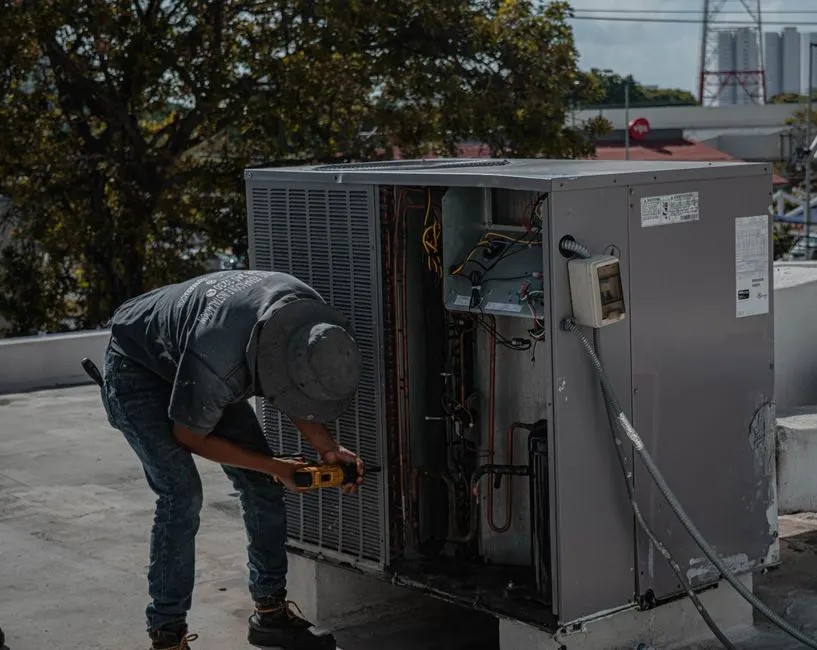
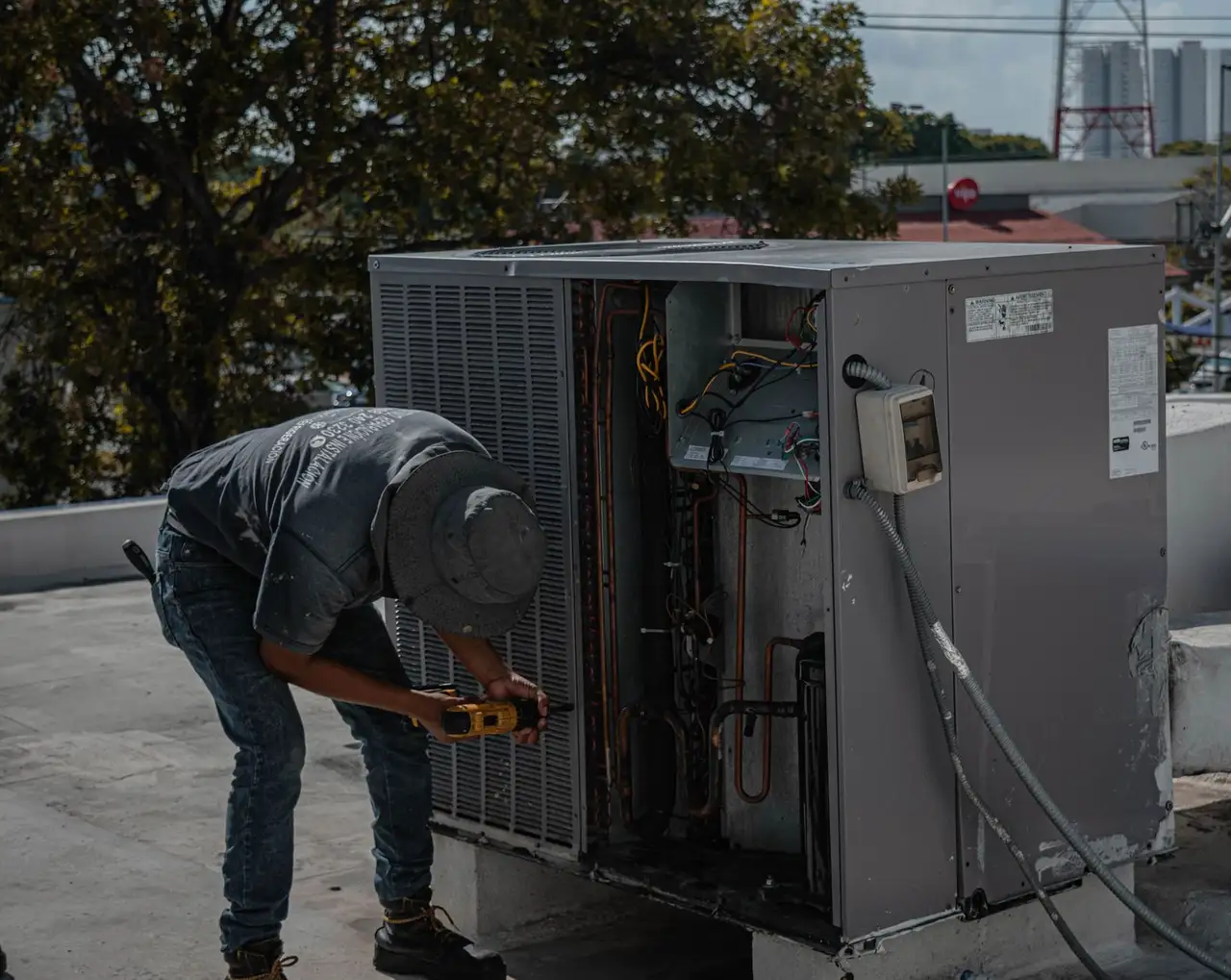
- Outdoor unit: Make sure it's running. Listen for the compressor and feel for warm air blowing off the top. If it's silent, you have an electrical or capacitor problem.
- Breakers: Check both the indoor air handler breaker and the outdoor disconnect. A tripped breaker that resets and trips again means a short - stop and call us.
- Registers: Walk the house and confirm no supply vents are closed or blocked by furniture. More than 20% of vents closed can freeze the coil.
If those five checks don't fix it, the problem is in the sealed system or the electrical components. That's when you need gauges, a multimeter, and a refrigerant license.
How Greenville's climate and older homes affect your AC
Greenville sits in Hunt County, where the design cooling temperature is 99°F and summer dew points routinely hit 70°F. That combination puts a heavier load on your system than the same equipment would see in Amarillo or El Paso. A unit that's "right-sized" on paper can struggle in a west-facing attic install.
Homes built before 1990 - which describes a large share of the housing stock near downtown and the West End - often have undersized return ducts, single-pane windows, and attic insulation rated R-11 or less. We regularly find 3-ton systems trying to cool 1,800 square feet through a 14-inch return. That's a recipe for a frozen coil and a short compressor life.
If your house is older, we may recommend a duct static pressure test before we replace anything. Fixing airflow is often cheaper than a new condenser. For more on this, see AC repair for older homes Greenville TX.
Common mistakes homeowners make
We've seen every DIY attempt gone wrong. These are the ones that turn a $200 repair into a $2,000 replacement.
- Adding refrigerant without finding the leak. Topping off a leaking system is a temporary fix that masks the real problem and can overcharge the compressor.
- Running the system with a frozen coil. This sends liquid refrigerant back to the compressor and can bend valves. Always thaw first.
- Replacing the thermostat as a first step. Thermostats rarely fail. We diagnose the actual fault before recommending parts.
- Ignoring a tripping breaker. A breaker that trips twice is telling you there's a short. Reset it once; if it trips again, call us.
- Using a pressure washer on the condenser coil. It flattens the fins and restricts airflow permanently. Use a garden hose with light pressure only.
When to call a professional
Call a licensed technician if you've replaced the filter, confirmed the thermostat is set correctly, and the air is still warm after 30 minutes. Also call if you see ice on the indoor unit, hear grinding or screeching from the outdoor unit, or smell burning near the air handler.
At Greenville CoolCraft, we diagnose the system, show you the failed part, and give you a flat price before we start work. No surprises. If the repair is more than half the cost of a new system, we'll tell you that too - and we'll walk you through AC replacement Greenville TX options if that's the smarter move.
We also handle residential AC Repair Greenville TX for every major brand, and we stock the parts that fail most often in this climate. If you're not sure whether it's a repair or a replacement, we can help you decide.
Frequently Asked Questions
How much does AC repair cost in Greenville TX in 2026?
Most common repairs - capacitor, contactor, blower motor, or a refrigerant leak repair - run $180 to $650 in 2026. A full compressor replacement typically costs $1,200 to $1,900. We give you a flat price before we start, and the diagnostic fee is waived if you approve the repair.
Why is my AC blowing warm air but the fan is running?
If the indoor fan runs but the air is warm, the outdoor unit likely isn't running or isn't cooling. The most common causes are a failed capacitor, a tripped breaker, or low refrigerant. Check the outdoor unit - if it's silent, call a technician.
Can I just add refrigerant myself?
No. Refrigerant is a regulated substance, and adding it without finding the leak is a temporary fix that can damage the compressor. A licensed technician must recover, leak-test, repair, and recharge the system to the correct weight.
How long should it take for my AC to cool the house?
A properly working AC drops indoor temperature about 1°F per hour when it's 95°F outside. If your system runs for 3 hours and the temperature doesn't move, you have a cooling problem, not a thermostat problem. Call us.
Is it worth repairing a 15-year-old AC unit?
If the repair is under $500 and the unit uses R-410A refrigerant, repair usually makes sense. If it uses R-22 (phased out in 2020) or the repair exceeds $1,000, replacement is typically the better investment. We'll give you both numbers.
Get help with AC Repair in Greenville
If your AC is blowing warm air and you've checked the basics, don't sweat it out. Greenville CoolCraft repairs all makes and models, and we offer same-day service across Greenville and Hunt County. Call us at (903) 304-5500 and we'll get your cold air back.